The Traditional Clothing Movement: Let History Illuminate the Future
作者:赵燕涛 编辑:吕聪
Author: Zhao Yantao
Editor: Lyu Cong
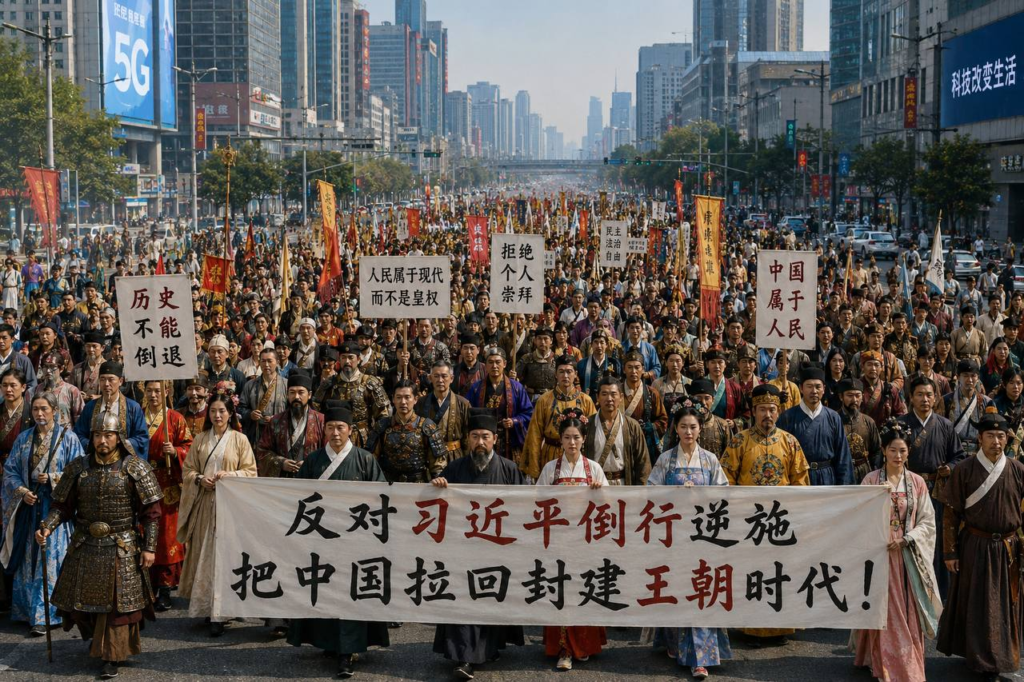
一百多年前,孙中山先生以及无数中华民族的英雄人物,为了改变中国几千年的封建制度,奋力拼搏,前赴后继,最终推动中华民族走出了封建王朝,走向现代民主共和的道路。
他们曾经相信,中国人民不应该永远生活在皇权之下,不应该只是服从命令的臣民,而应该成为国家真正的主人。
然而,令人没有想到的是,一百多年后的今天,中国却再次出现了权力高度集中的现象,中华民族的发展道路似乎又出现了历史的倒退,习近平这个千古罪人竟然又光明正大的做起了皇帝!
曾经推翻的皇权思想,以另一种形式重新出现;曾经被打破的个人崇拜,又重新影响着社会。
今天的中国大陆,人民确实住上了更好的房子,拥有了先进的科技产品,也享受到了现代经济发展的成果。
但是,一个真正现代化的国家,不仅仅是物质上的现代化,更应该是思想上的现代化。
如果人民不能自由表达自己的观点,不能监督权力,不能参与决定国家未来,那么即使拥有再先进的科技和再繁华的城市,精神世界依然可能停留在过去的封禁王朝时代。
最令人遗憾的是,仍然有很多人习惯接受单一的信息,习惯服从权威,甚至认为被统治、被限制是一件理所当然的事情。
但是历史告诉我们,一个民族真正的强大,不只是经济强大、科技强大,更重要的是人民拥有独立思考的能力,拥有追求自由和尊严的勇气。
今天,我穿着明朝官员的服装站在这里,是为了提醒大家:
我们不能忘记历史,也不能让历史重新循环。
过去,百姓只能等待皇帝的决定;
未来,人民应该决定国家的方向。
孙中山先生和无数先辈奋斗的目标,不应该被遗忘。
中华民族最终应该走向一个更加自由、民主、法治、尊重人民权利的未来。
最后,我希望可以发起一场全国性的古装运动,全中国人民,全部穿上古装,任何朝代的都可以,甚至你可以自己在家里用床单,旧衣服去制作,直到习近平皇帝宣布退位,直到中国共产党结束一党专政!
谢谢大家。
More than a century ago, Dr. Sun Yat-sen and countless heroes of the Chinese nation devoted themselves to ending thousands of years of imperial rule in China. Through tremendous sacrifice and perseverance, they helped lead China out of the era of dynastic monarchy and toward the path of a modern democratic republic.
They believed that the Chinese people should not live forever under absolute imperial authority. They believed that people should not merely obey orders as subjects, but should become the true owners of their own country.
However, what few could have imagined is that more than one hundred years later, China has once again witnessed a high concentration of political power. The nation’s path appears, in some respects, to have moved backward in history. Xi Jinping, in my view, has openly assumed a role resembling that of an emperor.
Ideas of imperial authority that were once overthrown have reappeared in a different form. The cult of personality that many believed had ended has once again become influential in society.
Today’s mainland China has achieved remarkable economic development. People live in better homes, use advanced technology, and enjoy many of the benefits of modernization.
But a truly modern nation is not defined only by material prosperity. It should also be modern in its ideas, institutions, and values.
If people cannot freely express their opinions, cannot hold those in power accountable, and cannot participate in shaping the future of their country, then no matter how advanced the technology or how prosperous the cities may become, the nation’s political culture may still resemble that of an earlier imperial era.
Perhaps the greatest tragedy is that many people have become accustomed to receiving only one source of information, accustomed to obeying authority, and even believe that being ruled and restricted is simply the natural order of things.
History teaches us that a nation’s true strength is measured not only by its economy or its technological achievements, but also by whether its people possess the ability to think independently and the courage to pursue freedom, dignity, and justice.
Today, I stand here wearing the robe of a Ming Dynasty official as a reminder to everyone:
We must not forget history, and we must not allow history to repeat itself.
In the past, ordinary people could only wait for the emperor’s decisions.
In the future, the people themselves should determine the direction of their country.
The ideals that Dr. Sun Yat-sen and countless generations before us struggled for should never be forgotten.
The Chinese nation should ultimately move toward a future that is freer, more democratic, governed by the rule of law, and more respectful of the rights of its people.
Finally, I hope to launch a nationwide “Traditional Clothing Movement.” I encourage people across China to wear traditional Chinese clothing from any dynasty. Even if you do not own historical clothing, you can make your own at home using bedsheets or old clothes.
Thank you, everyone.
Finally, I would like to end with two slogans:
“Down with the Chinese Communist Party.”
“Emperor Xi Jinping, step down.”